
Your Credit Score Matters: How to Improve It or Build One From Scratch
Whether you're rebuilding your credit or just getting started, every future homebuyer should know these steps.
Thinking about buying your first home? Before you start browsing listings or calculating your down payment, check one thing: your credit score.
Lenders review your credit score when deciding whether to approve your mortgage application. It can also influence the interest rates and lending options available to you.
The good news? Whether your credit score needs work or you have little to no credit history, you can take practical steps today to build a stronger financial future.
First, What Is a Credit Score?
In Canada, credit scores generally range from 300 to 900. The higher your score, the more creditworthy you are generally considered.
Credit Score General Rating:
800–900 Excellent
740–799 Very Good
670–739 Good
580–669 Fair
300–579 Poor
These ranges are general guidelines. Equifax, TransUnion and individual lenders may use different scoring models and standards.
Several factors influence your score, including your payment history, how much credit you use, the age of your accounts, and how often you apply for new credit.
And here's something important: You don't need to be wealthy or earn a six-figure income to have good credit.
PART 1: How to Improve Your Credit Score
If you've missed payments, carried high credit card balances, or simply haven't paid much attention to your credit, start here.
1. Pay Every Bill on Time
Your payment history is one of the biggest factors affecting your credit score.
Even one missed payment can hurt, especially if the credit bureaus report it.
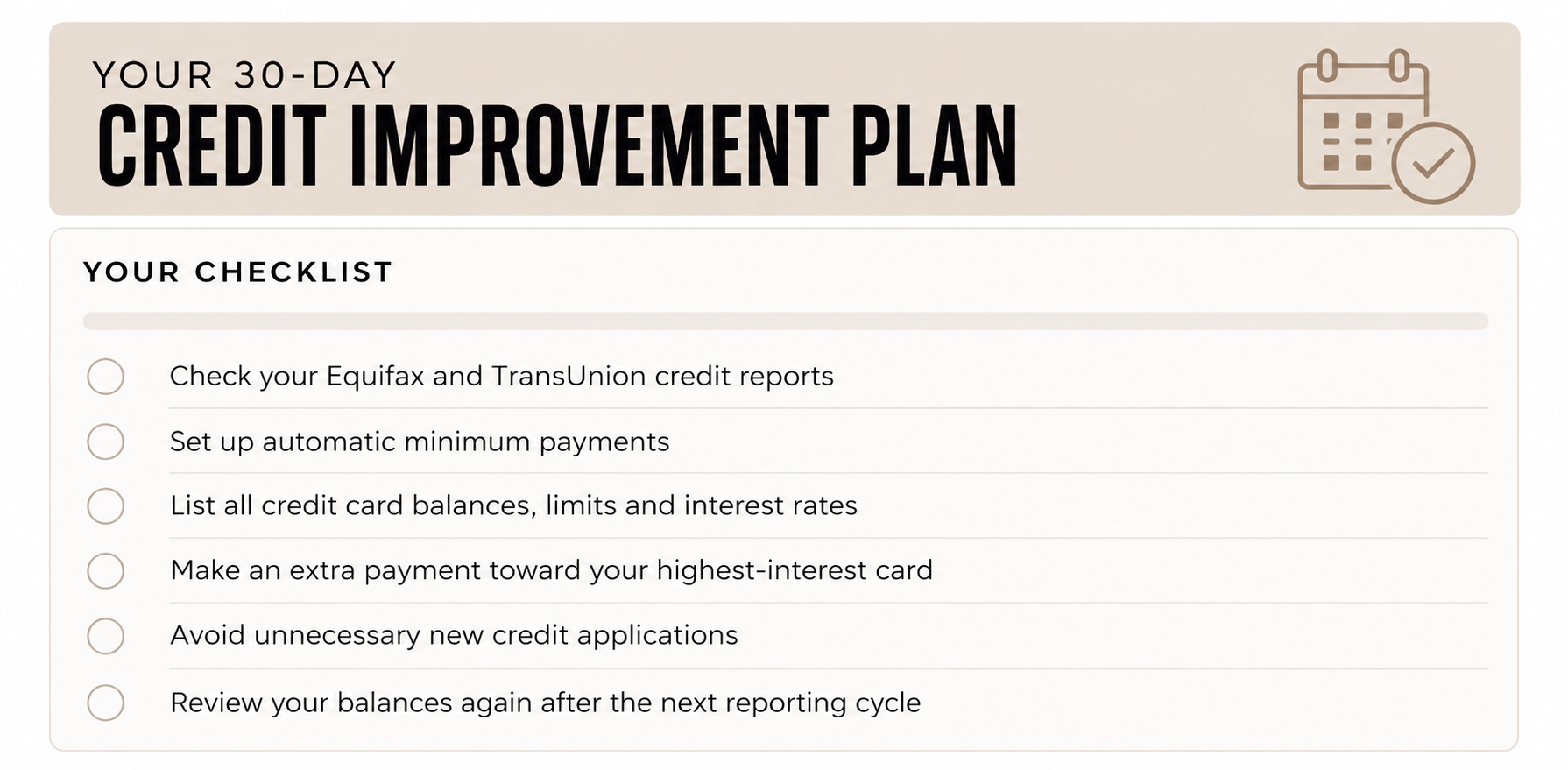
Smart Tip: Set up automatic minimum payments on your credit cards and loans. You can always pay more, but this helps ensure you never accidentally miss a payment.
2. Keep Your Credit Card Balances Low
This is one of the most important habits.
Lenders look at your credit utilization, how much of your available credit you use.
For example:
Credit card limit: $10,000
Balance: $8,000
Credit utilization: 80%
That's considered high.
Ideally, aim to use less than 30% of your available credit, and even less if possible.
Smart Tip: If you're carrying a high balance, paying it down can help your score once the lower balance is reported. You don't have to wait until the card is completely paid off to start making progress.
3. Don't Close Your Oldest Credit Card
The length of your credit history matters.
That credit card you've had for 10 years but rarely use? It may be helping your score.
Closing it could shorten your active credit history over time and reduce your total available credit.
Smart Tip: If the card has no annual fee, consider keeping it open and using it occasionally for a small purchase that you pay off in full.
4. Stop Applying for Credit You Don't Need
Every time you apply for a new credit card or loan, the lender may perform a hard credit check.
Too many applications in a short period can temporarily lower your score.
Smart Tip: If you're planning to buy a home in the next 6–12 months, avoid opening unnecessary new credit accounts or financing major purchases.
5. Check Your Credit Report for Mistakes
You might be surprised by what your credit report shows.
Incorrect balances, accounts that aren't yours, or payments incorrectly marked late could be hurting your score.
In Canada, you can access your credit reports through Equifax and TransUnion.
Smart Tip: Checking your own credit report doesn't lower your credit score. Make it a habit to review it regularly.
PART 2: How to Build Credit When You Have Little or No Credit History
Maybe you're a student, a young adult, new to Canada, or someone who's always paid in cash or with a debit card.
You may have very little credit history, and that's not the same as having bad credit.
Here's how to get started.
1. Start With One Credit Card
A credit card is one of the simplest ways to begin establishing credit history.
If you don't qualify for a traditional credit card, consider a secured credit card.
With a secured card, you provide a refundable security deposit, which typically helps establish your credit limit.
Use it for small purchases and pay the full statement balance by the due date.
Smart Tip: You don't need to spend hundreds of dollars. Even a small recurring purchase can help establish a payment history when the account is reported to the credit bureaus.
2. Use Your Credit Card, But Don't Max It Out
Let's say your first credit card has a $1,000 limit.
Try to keep your reported balance below $300, and ideally even lower.
A credit card isn't extra income. Think of it as a payment tool that helps demonstrate you can manage borrowed money responsibly.
Smart Tip: Pay your balance in full every month. Carrying a balance and paying interest won't build your credit score faster.
3. Consider Becoming an Authorized User or Joint Account Holder
Some families explore adding a young adult to an existing credit account.
However, in Canada, being an additional or authorized cardholder does not necessarily build your own credit history. Reporting practices vary.
A joint credit account may help establish credit when reported under both names, but both account holders can be responsible for the debt.
Smart Tip: Ask the financial institution exactly how the account will appear on your credit report before relying on it to build credit.
4. Consider a Credit-Builder Product
Some Canadian financial institutions offer products designed to help people establish or rebuild credit.
These may include secured credit cards or certain credit-building loans.
Before signing up, check whether the lender reports payments to Equifax or TransUnion, and review all interest charges and fees.
Smart Tip: Never pay unnecessary interest just to build credit. A properly managed credit card can often do the same.
5. Be Patient and Stay Consistent
Credit history isn't built overnight.
You need time to demonstrate that you can borrow responsibly and make payments consistently.
After several months of on-time payments, you may start building a score, depending on the scoring model and what information is reported.
Smart Tip: Start building credit before you need it. Don't wait until you're ready to apply for a mortgage.
Planning to Buy a Home? Here's What You Should Know
Your credit score matters when applying for a mortgage, but lenders consider more than that.
They also review:
Your income and employment history
Your existing debts and monthly payments
Your down payment and savings
Your overall ability to afford the mortgage
While a higher credit score can open up more lending options, no single credit score guarantees mortgage approval in Canada. Requirements vary by lender and mortgage product.
And remember, a strong credit score doesn't necessarily mean you're financially ready to buy a home. Your overall financial picture matters just as much.
5 Credit Mistakes to Avoid Before Buying Your First Home
Financing a new car: A new monthly payment could reduce the mortgage amount you qualify for.
Maxing out credit cards: High balances can hurt your score and increase your debt obligations.
Missing a payment: Even one reported late payment can affect your credit.
Opening several new accounts: Multiple applications can raise lender concerns.
Assuming your credit is fine without checking: Review your credit report early enough to address any surprises.
The Bottom Line
Whether you're improving a 600 credit score or building your first credit history, the same principles apply: pay on time, borrow responsibly, keep balances low, and stay consistent.
Good credit isn't about how much money you make. It's about how well you manage the credit available to you.
And if homeownership is part of your future, building good credit habits today can put you in a much stronger position when the time comes.
Thinking About Buying Your First Home?
At Deogracias Real Estate Group, we believe the home-buying journey should begin long before you start looking at properties.
Understanding your finances, preparing your credit and knowing your options are all part of making informed decisions.
We can connect you with a trusted mortgage professional who can help you understand your credit and what steps to take before applying for a mortgage.
Not quite ready to buy? That's okay. The best time to prepare is before you're ready.